Tuesday, September 28, 2010

Driving forces of the Renaissance

I believe that the system of guilds was the most crucial driving force of the Renaissance, because it established the civilizations' economy through the development of art and trade, thus stimulating the progression of knowledge and skill during the Renaissance. As the guilds flourished during the 15th century, newfound wealth of the city-states led to grand competitions for the most knowledge, and the rediscovery of lost wisdom. Because of its vital and influencial role in the revival of society, guilds were the foundation of the Renaissance.

image source: http://www.lessons-from-history.com/

Sunday, January 24, 2010

“If you wait, people will forget your camera, and the soul will drift up into view.”

Legendary photographer, Steve McCurry, was born in Philadelphia in 1950. He first pursued documentary filming, but decided to take the road of a newspaper photographer. McCurry travelled the world as a free lance photojournalist, and photographed civil struggles in Pakistan. When he eventually re-entered Pakistan (years later), he had rolls of film sewn within his clothes. McCurry is known for being unrestrained with his photography, and going the extra mile to portray the strife of millions of people through his photos. McCurry gravitates towards people suffering and in pain, and shows the essence of their thoughts. He wants people to stare into the eyes and face of the people, to feel their agony. Through looking at one of his simple, yet magnificent photos, he takes you on an everlasting journey through a stranger’s eyes. McCurry’s vision cannot be withheld inside him. “Most of my photos are grounded in people, I look for the unguarded moment, the essential soul peeking out, experience etched on a person’s face.”

After exploring the many galleries of Steve McCurry, the photo that is always carved into my mind is of a boy running through a hall that is covered with red hand prints. The walls are bright blue, and the prints are a deep, burgundy red. The two colors collide, capturing peoples’ attention. Undoubtedly, the most intriguing aspect of this photo is the aura of mystery. It captures a fleeting moment in the boy’s life and freezes it. The scene is completely up for interpretation. The reader could create many reasons for why the boy was running. Could he be playing a game of tag, did his mother just call him to come over for lunch, or could a man with a gun be just behind the photographer? They could also wonder about the handprints. Were they little decorations for the street, or were they representing the blood of children that were shed in some kind of war? This sense of liberty McCurry set up for the viewer forms a connection, as if they were a part of the scene occurring within the frame. “A good picture makes us curious and makes us want to know more.”

When people first see the photo I think that they mainly focus on the boy running and the red hands. This is because the hands are in the front, and the boy is in the center of the photo, emphasizing the two main features. After staring at the captured moment for a few more seconds, the viewer looks deeper. After my eyes wandered around the page they kept flickering back to the orange wall on the right of the picture. This was put in keenly by McCurry because it subtly shows people the conditions that the boy lives in. The wall is cracking and slowly rotting away. The walls and floor are the background of the photo, and tell their own story of the poverty in the area. The foreground, the boy and hands, shows the intricate attributes and the background, the rotting walls, shows simplicity.

McCurry uses foreground and background, color contrast, size and position, and more in order to have world class photography. He pours peoples’ hearts out through the lens and allows their voices to be heard. Many of his photos show fear through the innocent eyes of children, or the strain on an old woman’s face and McCurry allows their sorrow to seep into peoples’ souls. He shows raw and tender moments in the lives of strangers. “Fishermen cleaning nets, families sharing meals and celebrations, artisans crafting their wares, nomads continually on the move; even the most seemingly mundane activities can be inspirational when you look beneath the surface." McCurry photos display the internal and physical pain of an average person placed in a tormenting, impossible situation. He challenges us to act. It is because of this that McCurry’s photos will endure forever. No matter how much time may pass, the distress on the peoples’ faces will never fade away, and it will stick with you long after you have shifted your eyes away from the photo. It is because of this that McCurry will forever and always be a legend.

Sunday, September 27, 2009

Curiosity in Pandora and Orphan Boy


Curiosity is the underlying theme in the Greek and African myths, Pandora's Box and Orphan Boy, because they both portray how curiosity can unleash negativity and change the entire world. In Pandora's Box, Pandora receives a box from Zeus, and can’t resist opening it. The world is changed because all pain and suffering is released. In Orphan Boy, an old man receives help from a magical boy, but betrays his trust by spying on him. The boy abandons him, causing drought and famine. In both of these myths, curiosity is shown in a negative light, but curiosity has also led to discovery of technology and medicine, saving people’s lives.

(http://images.barnesandnoble.com/images/19090000/19090675.JPG
http://media.photobucket.com/image/pandora/Pandora01/Pandora-1.jpg)

Monday, September 14, 2009

My Name


My name is like my own, individual brand of sticky glue. Initially, the brand name catches the attention of a passerby at a market or store. Only catching a glimpse of a few letters, they are intrigued. They must buy that glue. The customer realizes that it may come in handy someday. They purchase it. Not entirely satisfied by the glue, they chuck it into an old cupboard of pointless objects. The next day, they casually visit the market once again, and they catch a glance of this brand of glue that is perfect for their faltering chair. They try out the glue at home, and it is sturdy and tough. Eventually they run out of that glue, and now have to go and purchase something for the little chip on the coffee table. They remembered that old, forgotten glue, and pull it out of the reject cupboard. Instead of wasting time searching for more glue, they use the old one. Although it wasn’t great, it did hold things together.

If you still haven’t guessed, my name is that innocent, little, reject glue. My sister was the broken chair, who was secured by the best glue, and I was the coffee table, being held together by the discarded one. My parents were searching for a name for my older sister, and they came across mine, but they chucked it aside for the new one they had found for her. Once I was born, they settled for the name that was chucked aside.

I am not declaring that I hate my name, but sometimes it doesn’t quite express me. In Hebrew and Latin it means grace, in Japanese it signifies an apricot, and in Sanskrit it means grain. I am by no means graceful, I am not quite fond of apricots, and I am quite certain I am not a grain.
My name is like a perfectly fitted dress, but unlike anything else, this dress transforms as I do. As I am very leisurely and gradually growing up, this dress alters with me. It has become all the times my mother has shrieked my name for me to tidy my room, and my big sister squealing at me when I “accidently” wore her favourite shirt.

My sister’s name is simple, short, and like nothing you have ever heard. It flows nicely, and any nickname it has, is longer. It is only 3 words, and two of them are vowels. It can be nicknames for other names, but nothing can be a nickname for it. Her name is Lua.

My name may have seemed like the old, unwanted glue, but it is not my identity, I am its identity. It is my yellow Livestrong band that once on, never comes off. It is actually a common name, Anna, but with an interesting twist from the suffix. Many people tend to pronounce it improperly. My name has been like a veil, protecting me from feeling any frustration. I have gone through entire years allowing people to say it wrong, but as long as I know, deep down, my name, and my identity, nothing can thwart me. My name is me, but I am it. Every day, and every night I am Anissa. My name has stuck with me through thick and thin, and it will never abandon me, no matter what.

(http://static.howstuffworks.com/gif/multipurpose-glues-1.jpg)

Common Themes Of Creation Myths


Common Creation Myth Themes

Throughout time, various countries have each developed a distinct representation for the evolution of mankind. Chaos, supreme creators, and separation are the three elements that unite the Egyptian, Maori, and Chinese cultures. In the Egyptian and Maori myths, originally there was a void of nothingness. The Chinese assumed that the universe was initially shaped as a cosmic egg, but within it was nothing. From these voids of nothing came the supreme creators. The Egyptians believed their creator, Atum, materialized from the chaos, and gave birth to the gods, earth, and sky. In the Maori myth, instead of giving birth to the earth and sky, the two first beings were the earth and sky. The Chinese believed that their creator, Phan Ku, came out of the cosmic egg, and fashioned our universe with his chisel. In each creation myth there seemed to be some kind of separation that was crucial for the development of the earth. In the Egyptian creation myth, the earth and sky were separated because of their love for their creator, who wanted to form the earth. The Maoris also believed that the earth and the sky were disjoined, but only because their children pushed them apart for more room. In order to complete the Earth, the Chinese say that Phan Ku needed to die and use his body to finish the landscape. Mankind then lost him, which is the justification for human suffering. From these connections it evidently appears as though in creation myths people used to think alike, even though nowadays we are such individuals. I think that the myths have endured throughout time because they help explain the formation of the world and human nature, answering the questions humans have always been seeking.

Thursday, September 3, 2009

Picture and Quote Explanation


Explanation for Picture

The dark silhouette of the lonesome man is visible on the beach, with footprints in the sand showing where he had originally come from. The sky is enshrouding him like a blanket. There is nothing in front of him, yet he continues on in his way. To me it symbolizes life's journey. We continue on, not certain about what will transpire. Sometimes we are alone, but it can’t hinder us. No obstacle should prevent us from continuing.

Explanation for Quote

This quote specifically seized my attention, because it shows the free will of mankind, and the choices we make. Throughout our lives we make decisions, and continue on in our journey of life. To be an individual, we need to pursue our own paths and not follow everyone else. We must be unbound and limitless. We should be unrestrained like the wind. Nothing should ever thwart us from fulfilling our dreams. Our journeys are never ending.

Tuesday, May 5, 2009

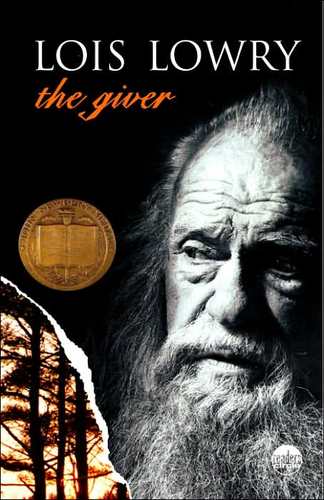
Giver Fishbowl Extension


Today in class we needed to write or expand on our fishbowl (discussion) that we had during class, which was based on The Giver. We came up with a few questions that were broken up into two sections. One was Stirring, and the other was Releasing. Below I will write what I feel about the two subjects. (I have already read the book, so don’t read on if you haven’t!)

Stirrings
I think that Stirrings are the beginning of puberty. Jonas felt the need to be with Fiona, which, from what I heard, seems to be the signs of the beginning of adolescence. Along with adolescence comes a connection with different people, which could lead to marriage and children.

Now that I think about it, it seems to also be connected to the Octo-mom. America has given her the free will to have children. This has stirred up many different things. She is getting a considerable amount of attention, and people have questioned how much the government should be involved in these kinds of issues.

Then you can look at the China one-child policy. Everything is controlled, and people are unhappy. The government still appears content that everything is in order.

Now look at “Jonas’s community”. Unlike in the US, everything is controlled. They can only have two children (one boy and one girl). Unlike China, everyone is content. I think this is because they don’t know a life with a free will. Everything in their existence has been robotic. The Committee of Elders controls everything so all is in order. They give people pills in order to prevent any problems in the community, where people fall in love. They match people a partner who they will be capable of living a normal, average life with. There is no real love shown between them or the children. Everything is set up in their town to The Committee’s idea of perfect. There won’t be divorce or any controversy whatsoever.

Another one of the questions was whether or not they had privacy of their dreams and thoughts. It depends on how you look at it. I don’t think that anyone can read their minds or anything, but they have to share their dreams and feelings. Then again, they could easily lie…I am undecided.

Release
I know for a fact that releasing is killing.
I read the book in second grade, so my memory is literally as clear as mud. What I do remember is that the way they killed the new children were by sticking some kind of needle in their heads…ugh!
People are wondering why there is releasing. I am still a bit hazy on the subject, but I think that it is because The Committee of Elders wants to keep order in the town. If people knew that they would eventually die, they wouldn’t be as happy about Release at all. To them it seems as if Release is a time of joy and happiness. If they knew, I think there could be a little bit of chaos in the town. People might start questioning whether or not they could trust the Committee. They could attempt to escape.
Another thing I was wondering is what happens to the people that already know what releasing is, like The Committee of Elders, The Nurturers, and actual Releasers. Are they Released, and if yes, are they joyous too?

The question that I asked during class was whether or not anyone dies outside of the Releasing room. By that, I mean could they have a heart attack, disease, old age, etc.
After having time to ponder on this subject, I have decided that everything is so controlled, that it might be impossible for that to happen. Think about it. Everything is so controlled that there couldn’t possibly be diseases. They don’t allow other people to come to their community, so no illness could be carried over. Also, they don’t even know what death is, so there couldn’t be suicide.
Then again, someone could accidentally fall or trip, or even choke…once again, I am really puzzled.

Hopefully when I reread The Giver, these questions will be answered!

thank you